
Professional Care Guarantees
- Treatment by Certified MPT / BPT Doctors only.
- Advanced Modalify Equipment (Class 4 Laser, SWD, etc.)
- Home Visits available 7 days a week.
Shoulder Pain Treatment
Medical Overview
Advanced physiotherapy for shoulder pain — frozen shoulder, rotator cuff injuries and bursitis.
Key Benefits
- Rapidly reduces acute shoulder inflammation
- Restores full range of overhead motion
- Effective recovery for Frozen Shoulder
- Non-surgical rotator cuff rehabilitation
- Relieves bursitis and impingement pain
- Improves joint stability and posture
- Certified MPT Doctor-led sessions
- Customized home exercise protocols
Clinical Benefits & Procedure
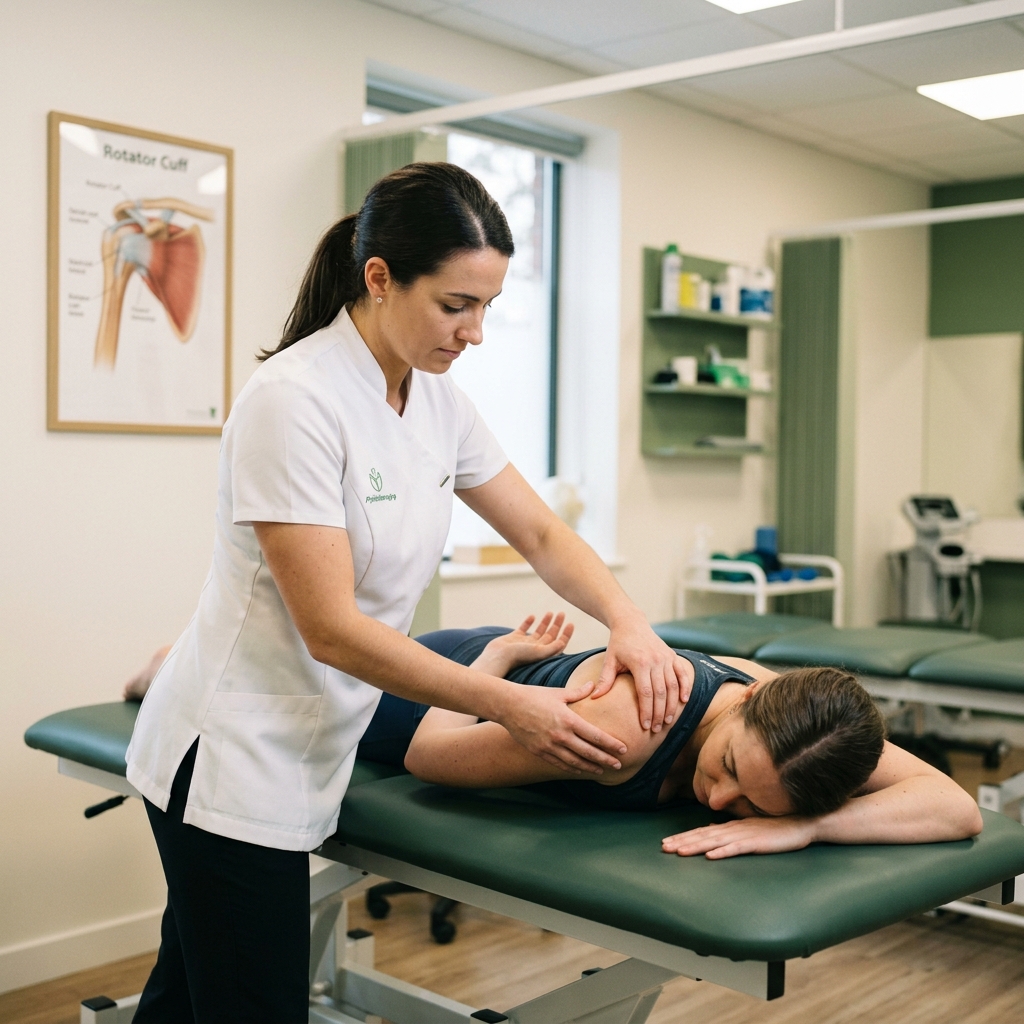
Our certified physiotherapists use manual therapy, electrotherapy, and targeted exercise to restore shoulder mobility and strength.
Dr. Rakesh (MPT)
Director & Head Physiotherapist
Specialist in Advanced Pain Management & Sports Rehabilitation.
Educational Guide
Types of Physiotherapy
Understanding the different branches of physiotherapy helps you choose the right treatment for your condition.
Manual Therapy
Involves the therapist using their hands to manipulate, massage, and mobilize body tissues. Helps reduce pain and improve flexibility.
e.g. Joint mobilization, manipulation, myofascial release
Exercise Therapy (Therapeutic Exercise)
Specific movements prescribed to strengthen muscles and improve range of motion. The most common form of physiotherapy.
e.g. Stretching, strengthening exercises, balance training
Electrotherapy
Uses electrical energy to stimulate nerves and muscles. Highly effective for pain management and tissue healing.
e.g. TENS, IFT (Interferential Therapy), EMS
Heat & Cold Therapy (Thermal Therapy)
Uses temperature changes to treat injuries. Heat for chronic pain; Cold (Cryotherapy) for acute injuries to reduce swelling.
e.g. Hot packs, ice therapy, cryotherapy
Hydrotherapy (Aquatic Therapy)
Exercises performed in water. Buoyancy reduces joint load, making movement easier for arthritis or severe injury patients.
e.g. Pool-based rehabilitation, aquatic walking
Sports Physiotherapy
Designed specifically for athletes. Focuses on treating sports-related injuries and improving athletic performance through conditioning.
e.g. ACL rehab, sports taping, performance training
Neurological Physiotherapy
Focused on patients with nervous system disorders. Helps re-wire the brain-body connection for improved movement and independence.
e.g. Stroke rehab, Parkinson's, MS, spinal cord injuries
Geriatric Physiotherapy
Tailored for older adults. Addresses age-related issues like osteoporosis, arthritis, and balance disorders to prevent falls.
e.g. Falls prevention, joint mobility, osteoporosis care
Orthopedic Physiotherapy
Deals with the musculoskeletal system — bones, joints, ligaments, and tendons. Essential for post-surgical recovery.
e.g. Fracture rehab, ACL repair, knee replacement recovery
Cardiovascular & Pulmonary Physiotherapy
Focuses on patients with heart and lung diseases. Involves breathing exercises and guided physical activity to improve endurance.
e.g. Breathing exercises, cardiac rehab, COPD management
Expert Shoulder Pain & Rotator Cuff Recovery
Shoulder pain is a complex condition that can stem from various structures including tendons, ligaments, and the joint capsule. The shoulder is the most mobile joint in the human body, but this mobility comes at the cost of stability.Whether you are suffering from a sharp pain when lifting your arm, a dull ache that prevents sleep (Night Pain), or a complete loss of motion known as 'Frozen Shoulder' (Adhesive Capsulitis), a structured physiotherapy approach is essential. At World 2050, we combine manual therapy with advanced modalities to ensure your shoulder regains its full strength and range without the need for invasive surgery.
Clinical Causes of Shoulder Dysfunction
The shoulder complex (glenohumeral joint) is prone to mechanical stress and degenerative changes.
- Rotator Cuff Tendinopathy or Tears
- Adhesive Capsulitis (Frozen Shoulder)
- Subacromial Impingement Syndrome
- Bicipital Tendinitis
- Labral Tears (SLAP lesions)
- AC Joint Arthritis
- Shoulder Bursitis
- Post-Surgical Stiffness (Post-ORIF/Arthroscopy)
Accurate clinical diagnosis through special tests (Neer's, Hawkins-Kennedy) is the first step toward recovery.
Warning Signs: When to Seek Immediate Care
Delaying treatment for shoulder issues can lead to permanent 'muscle wasting' and severe stiffness.
- Inability to lift the arm above 90 degrees
- Radiating pain down to the elbow or hand
- Persistent pain at night that interrupts sleep
- Visible deformity or extreme swelling around the clavicle
- Weakness that prevents holding even light objects
- Catching or locking sensation during movement
Our Specialized Recovery Pathway
Modern medicine offers several pathways to recovery. A combination of these is often the most effective.
Manual Mobilization
Maitland and Mulligan techniques to gently move the joint capsule and restore glide-and-slide motion, especially critical for Frozen Shoulder.
Class 4 Laser Therapy
Using deep-penetrating light energy to reduce inflammation in deep tendons (Rotator Cuff) and speed up ATP production for cellular repair.
Scapular Rhythm Retraining
Correcting the way your shoulder blade moves to prevent impingement when you lift your arm.
Dry Needling
Releasing deep myofascial trigger points in the trapezius and infraspinatus muscles that cause referred pain.
Clinical Exercise Protocols
Phase 1 focuses on mobility (Pendulums, Wall Crawls). Phase 2 focuses on Isometrics to build pain-free strength. Phase 3 progresses to Eccentric loading to rebuild tendon resilience. Never start heavy weight training while the joint is inflamed as it can worsen tears.
Personalized Exercise Plan
Contact us for a bespoke clinical assessment.
Shoulder Care Tips
- Always sleep on your back or the non-painful side with a pillow support.
- Avoid carrying heavy laptop bags on the affected shoulder.
- Take regular 'micro-breaks' if you work at a computer for long hours.
- Use a warm compress for 10 minutes before doing your mobility exercises.
Shoulder Treatment FAQs
Q. How long does Frozen Shoulder take to heal?
Ans. With regular physiotherapy, recovery can be shortened to 3-6 months, compared to 1-2 years without intervention.
Q. Can I continue gym workouts?
Ans. We recommend avoiding 'overhead' presses until your scapular rhythm is restored. Consult our doctor first.
Q. Do I need an MRI?
Ans. In 80% of cases, a clinical examination is enough to start treatment. MRI is usually reserved for suspected full-thickness tears.
Insights from
Dr. Rakesh (MPT)
Lead Physiotherapist & Director
"With over 8 years of advanced clinical expertise, Dr. Rakesh specializes in neurological rehabilitation and sports medicine. He has successfully treated over 5,000 cases of complex joint and spine issues using evidence-based practice and advanced clinical modalities."
Joined by 12+ other specialists